Smart Home vs Home Automation: What's the Real Difference? (And Which Do You Need?
If you've ever asked someone to explain the difference between a smart home and home automation, you probably got a vague answer. The two terms get used interchangeably all the time, but they actually describe different things. Understanding that distinction matters, especially before you invest in technology for your own home or commercial space in the Tri-State area.
This guide breaks down what each term really means, how they work in daily life, what they cost, and how to decide which approach fits your property. Whether you're in a Jersey City high-rise or a suburban house in Bucks County, the right answer is probably a blend of both.
Key Takeaways
- A smart home gives you remote control of devices via smartphones, voice assistants, and apps. Home automation takes it further by making devices act on their own based on schedules, sensors, and scenes.
- Most New Jersey and Tri-State (PA, NJ & NY) homes today end up with a hybrid setup: some wired home automation infrastructure installed during a major renovation or new build, plus wireless smart home devices layered on top.
- A well-designed home automation system runs security, lighting, climate, and entertainment systems in the background, while smart home technology lets you check your front door camera, adjust air quality, and manage the best smart home devices from anywhere.
- Brinster Electronics is the expert integrator that designs, installs, and supports both smart homes and custom home automation systems for homeowners and businesses across the greater Tri-State area.
- Whether you're in a condo adding Google Home speakers or a large estate planning full wired home automation, start with a consultation to avoid costly mistakes.
Smart Home vs Home Automation in 30 Seconds
Here's the short version: a smart home lets you control things; home automation makes things control themselves.
- A smart home is a house with connected devices you can operate via phone apps, voice assistants like Google Home or Amazon Alexa, or a central touchscreen. The emphasis is on remote control and convenience.
- Home automation is a coordinated system where lights, HVAC, shades, security, and AV respond automatically to time of day, occupancy, sensor readings, and pre-built scenes, with minimal manual input.
- You can have smart devices without much automation (a collection of scattered gadgets). And you can have automation without a lot of visible smart gear (discreet, built-in systems that quietly run in the background).
- Smart homes can involve both individual devices and automated processes, but the defining characteristic is connectivity and user-driven interaction.
At Brinster Electronics, we typically blend both approaches in New Jersey and Tri-State projects, so clients get hands-free comfort plus easy app and voice control when they want it.
What Is a Smart Home, Really?
A smart home is any residence using internet-connected devices to control and monitor functions like lighting, climate, home security, audio/video, and appliances. Smart home technology focuses on remote control and internet connectivity, giving homeowners real-time access to what's happening in their house from anywhere.

These homes typically rely on Wi-Fi or mesh networking plus platforms such as Google Home, Amazon Alexa, and Apple HomeKit to tie devices together. Connectivity and communication are central to the concept of a smart home.
Typical smart home devices include:
- Smart speakers and a smart display
- Smart thermostats
- Smart plugs and smart bulbs
- Security cameras and a video doorbell
- Smart locks
- Connected TVs and entertainment systems
- App-controlled smart lighting
One of the biggest advantages is that smart home devices can be added gradually for simpler integration. Many homeowners start with just one device, like a smart thermostat or a front door video doorbell, and build from there. Smart home devices can be purchased individually for under $100, and smart locks can be installed without professional help.
Brinster Electronics designs and installs complete smart home ecosystems throughout PA, NJ & NY, ensuring compatibility and reliable networking rather than leaving you with a collection of disconnected gadgets.
What Is Home Automation?
Home automation refers to the automatic control of home systems based on rules, schedules, and sensor inputs, often via a centralized home automation system or controller. Home automation systems focus on autonomous pre-programmed routines rather than waiting for you to tap an app.
Classic home automation is often wired, using dedicated protocols like KNX or proprietary low-voltage bus systems installed during new construction or a major renovation. Modern systems can also be hybrid wired/wireless. Home automation integrates devices into a cohesive system that functions without user input, and home automation requires installation and programming by trained professionals.
Concrete examples of automation in action:
- Lights dimming automatically at sunset
- Shades closing when the room overheats from solar gain
- The security system arming when the last person leaves
- HVAC adjusting based on occupancy sensors
- An "Away" scene that locks doors, sets back the thermostat, and turns off non-essential circuits
Home automation executes preset actions without user intervention. Many of these routines are invisible to the homeowner, and that's the point. The home system focuses on hands-off efficiency for repetitive tasks. Things just happen without needing to tap an app or issue a voice command each time.
Brinster Electronics engineers and programs custom automation scenes for lighting, climate, security, and AV, tuned to each client's schedule and lifestyle.
Smart Home vs Home Automation: Core Differences
The distinction comes down to who (or what) is making the decisions:
- Smart homes emphasize user-driven control: remote access, voice commands, app interfaces. Smart home technology requires active user intervention via apps, voice, or panels. Smart homes prioritize real-time convenience and control.
- Home automation emphasizes system-driven behavior: rules, logic, and sensors running in the background. Home automation is considered more sophisticated and integrated than smart home technology. Home automation can exist independently of a smart home, and smart homes can include devices that do not automate tasks.
- Installation differs significantly: smart home devices are usually wireless, modular, and DIY-friendly. Home automation often involves professional design, central racks, structured cabling, and programming.
- Think of it this way: "smart" describes the devices and interfaces, while "automation" describes the behaviors they perform. One is about connectivity, the other about choreography.
In real Tri-State projects, Brinster Electronics delivers a hybrid: smart devices integrated into a robust automation backbone, so users can both override manually and enjoy hands-free operation.
How Smart Home Devices Work Day to Day
Picture a typical day: you're at the office in Manhattan and pull up your front door camera on your phone to check a delivery. On the way home, you adjust your smart thermostats remotely so the house is comfortable when you arrive. In the kitchen, you ask your voice assistant to play music on the smart speaker and add items to your grocery list.
Smart home devices often operate independently using Wi-Fi, connecting securely to hubs and cloud platforms. Smart homes allow remote control of devices via apps, letting New Jersey homeowners monitor home security or tweak heating while traveling. Remote access is central: whether you're checking security cameras or adjusting smart lighting, your phone is the control panel.
Voice assistants like Google Assistant and Alexa serve as unified interfaces. A single voice command can control lights, speakers, locks, and more. Smart home systems can integrate with voice assistants like Alexa, and the system supports voice commands for nearly everything. This is especially useful in kitchens, living rooms, and home theaters where your hands are busy.
Smart home devices can learn user schedules for automation, blurring lines between "smart" and "automated." Even simple automations, like scheduling lights or thermostat setbacks, are often configured within these smart home apps.
But none of this works well without solid networking. Brinster Electronics designs secure Wi-Fi and hardwired network infrastructure so connected devices respond instantly and reliably, even in large homes with concrete walls or multiple floors.
How Traditional Home Automation Systems Operate
A central automation controller ties together lighting circuits, HVAC, motorized shades, security, and AV via structured cabling and low-voltage wiring. Home automation systems utilize dedicated protocols like Zigbee or Z-Wave for device communication, providing reliability that pure Wi-Fi setups can't always match.
Key components include:
- In-wall keypads and elegant control surfaces
- Occupancy and motion detection sensors
- Contact sensors on doors and windows
- Temperature and air quality sensors
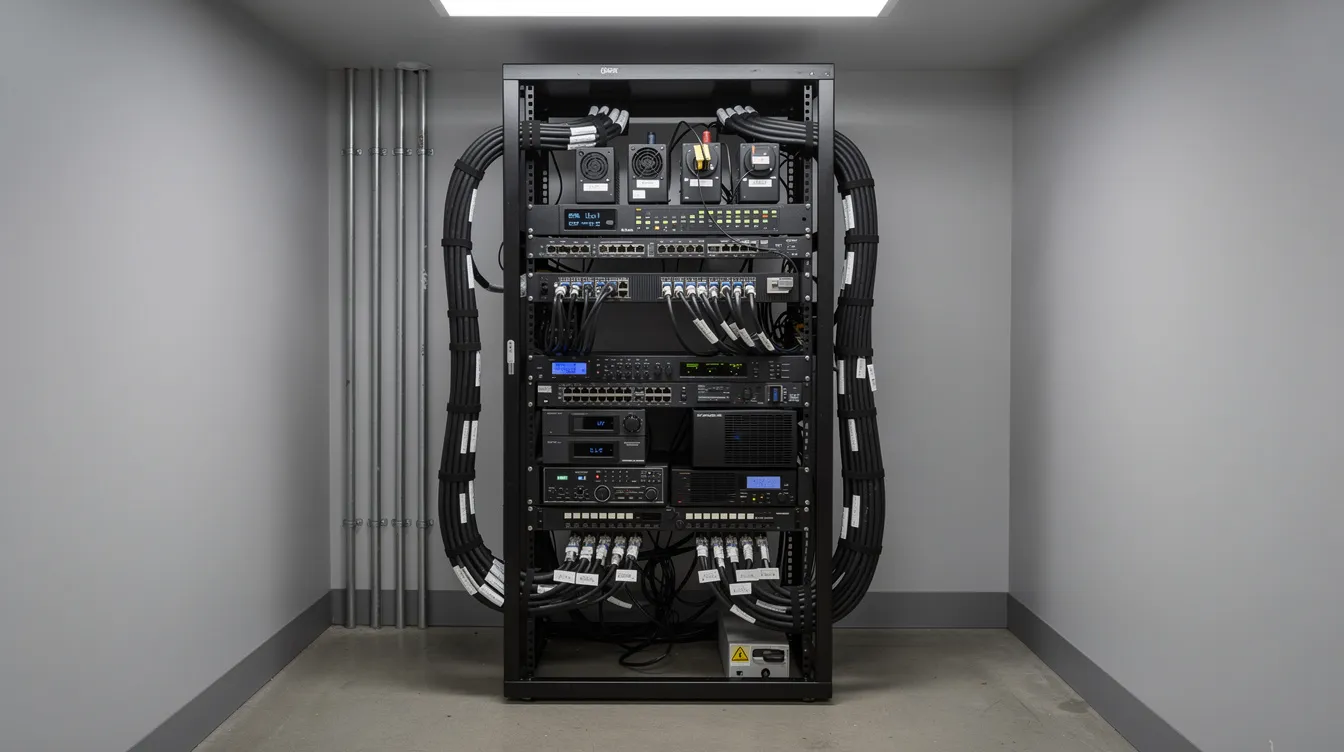
- Rack-mounted processors housed in a utility or AV closet
Scenes are the signature feature: one button press or scheduled event can change multiple systems at once. An "Away" scene might turn off lights, set the thermostat back, arm the home security system, and lock every exterior door. A "Movie Night" scene dims lights, lowers shades, and switches AV inputs. Home automation systems require installation and programming, but once configured, the homeowner barely has to think about it.
Wired connections are less sensitive to Wi-Fi dead zones and tend to be more secure, which is why they're common in larger homes and upscale commercial spaces across PA, NJ & NY. Brinster Electronics handles design, wiring, programming, and long-term support for these integrated automation systems so clients don't have to manage the technical details.
Smart Home vs Home Automation: Side‑by‑Side for New Jersey Homes
Here's a practical buyer's comparison for Tri-State homeowners:
- Cost: Smart home devices can start under $100 per room (a smart plug, a single security camera, or smart bulbs). Wireless smart home systems can be limited to several thousand dollars total. Fully integrated home automation for a multi-story home can run into the tens of thousands, with wired home automation systems costing £5,000–£10,000 on the lower end for core infrastructure.
- Disruption: Smart devices install with minimal mess and easy installation. Wired home automation often pairs best with a major renovation, new build, or full electrical upgrade where walls are already open.
- Scalability: Smart homes are easy to grow organically, but can become complex to manage across multiple apps and different brands. Automation centralizes complexity so the user experience stays simple even as the house grows.
- Reliability: Smart devices depend on Wi-Fi and sometimes cloud services. Automation systems with wired backbones operate locally, maintaining function even when internet goes down.
Brinster Electronics helps clients decide where wireless smart add-ons are enough and where a true automation backbone makes more sense, based on property size, lifestyle, and long-term goals.
When a Smart Home Approach Makes the Most Sense
Many existing homes and condos in New Jersey, New York City, and eastern Pennsylvania are best served by incremental smart upgrades. Wireless smart home systems are easier to install than wired ones, making them ideal for finished spaces.
Common scenarios:
- Renters in Hoboken or Brooklyn adding smart speakers and smart bulbs for voice control and ambiance
- Families in older Montclair or Princeton homes installing a video doorbell and smart locks without touching the wiring
- First-time buyers in a new house wanting to start small and expand over time
The advantages are clear: low upfront cost, no need for construction permits, and quick wins such as app-based front door monitoring or remote thermostat control. Smart products can be added one at a time, and you don't need to commit to a whole home system on day one.
Limitations exist, though. You might end up with app overload from managing individual devices across different brands. Occasional Wi-Fi dead spots can cause inconsistent behavior. And without professional integration, your connected home can feel disjointed.
Brinster Electronics offers consultation and installation to rationalize scattered devices into a coherent smart home system with reliable networking and clear control interfaces.
When a Full Home Automation System Is the Better Choice
Wired or hybrid automation systems shine in large homes, new construction, and major renovation projects across the Tri-State, where long-term reliability and deep integration matter most.
Use cases we see regularly:
- A new custom build in suburban New Jersey needing centralized lighting control across 20+ rooms
- A shore house in Long Beach Island with automated climate management and leak detection
- A commercial office in Manhattan with integrated AV and security systems
The benefits include fewer visible gadgets, consistent wall controls, robust response even when Wi-Fi is congested, and easier system-wide changes via professional programming. Upfront investment is higher, but the system can add real estate value, improve energy efficiency, and simplify long-term maintenance.
Brinster Electronics collaborates with architects, builders, and designers during the planning phase so cable runs, equipment rooms, and control locations are elegantly integrated from day one. Check our project portfolio to see how this looks in practice.
Hybrid Is the Future: Blending Smart Home and Automation
Most of Brinster Electronics' recent projects combine a structured automation backbone for lighting, HVAC, and security with flexible smart devices like speakers, TVs, and specialty sensors. Matter is an industry standard designed to improve interoperability among smart home devices, and its adoption is making hybrid approaches more seamless than ever.
Consider a Bergen County home where lighting and shades are centrally automated, while the best smart speakers, streaming boxes, and connected TVs are controlled through a unified remote and app. The homeowner enjoys powerful scenes like "Movie Night" or "Goodnight" while still being able to say "Hey Google, turn on the front yard lights" or check air quality in the nursery via a smart display.
Hybrid systems also protect against vendor lock-in. Brinster Electronics can integrate multiple brands and protocols behind a consistent user interface, so you aren't trapped if one manufacturer discontinues a product line.
If you feel stuck with scattered gadgets that don't talk to each other, a professional integration and automation layer can unify what you already own into a smart home ecosystem that actually works together.
Room‑by‑Room: How Smart Home & Automation Play Together
Here's a quick walkthrough showing how smart features and automation complement each other in real New Jersey homes.
Front Door & Front Yard Integrated smart locks, video doorbells, and security cameras tie into a home automation system so lights automatically turn on when someone approaches. Smart locks enable remote monitoring of home access, and owners maintain remote access from their phones. Motion detection triggers recording and notifications instantly.
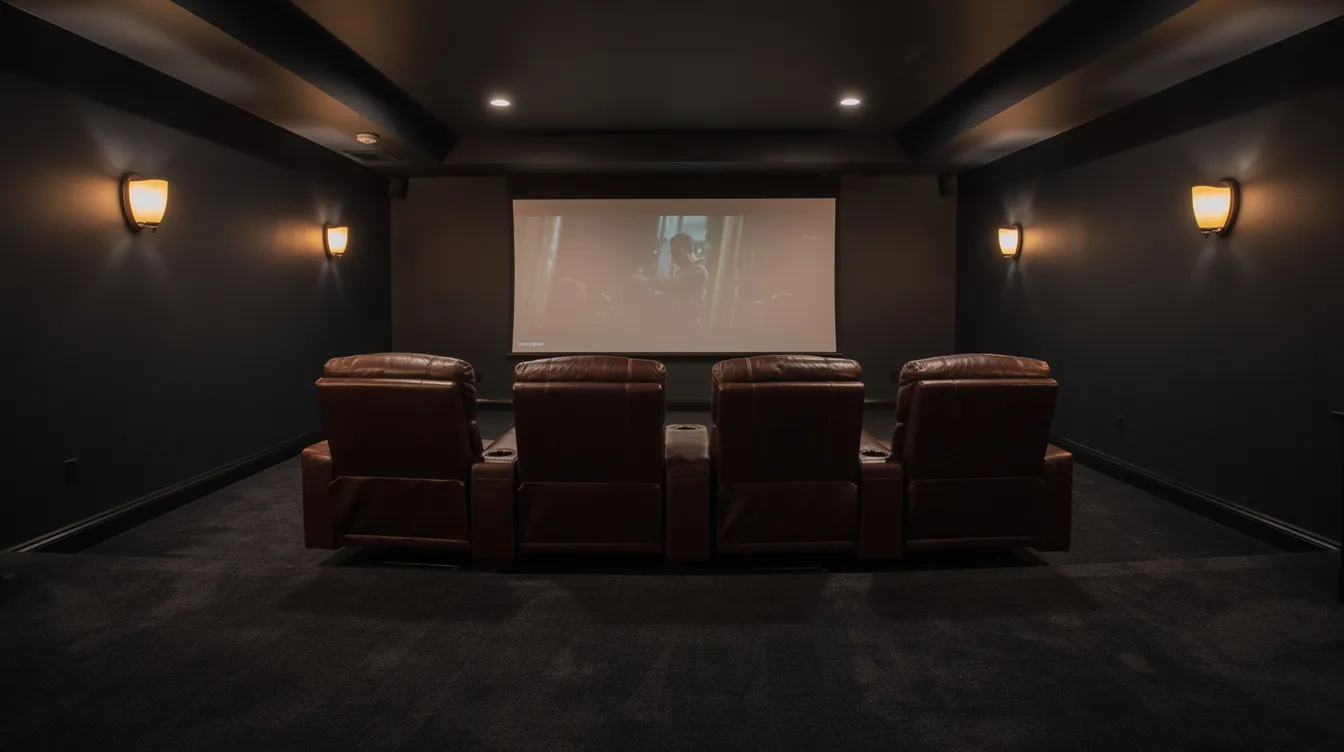
Living Room & Media Room Brinster Electronics' custom home theater and media room installations feature lighting scenes, AV gear, and motorized shades that respond automatically to "Watch" or "Game Day" commands. A single voice command or button press orchestrates the entire experience.
Kitchen & Dining Smart lighting, leak sensors, and voice-activated assistants serve double duty. Google Assistant or Alexa or Google can handle video calls, manage a grocery list, or set timers, while also connecting to larger energy and safety automations. Smart bulbs can be controlled remotely and scheduled to match your routine.
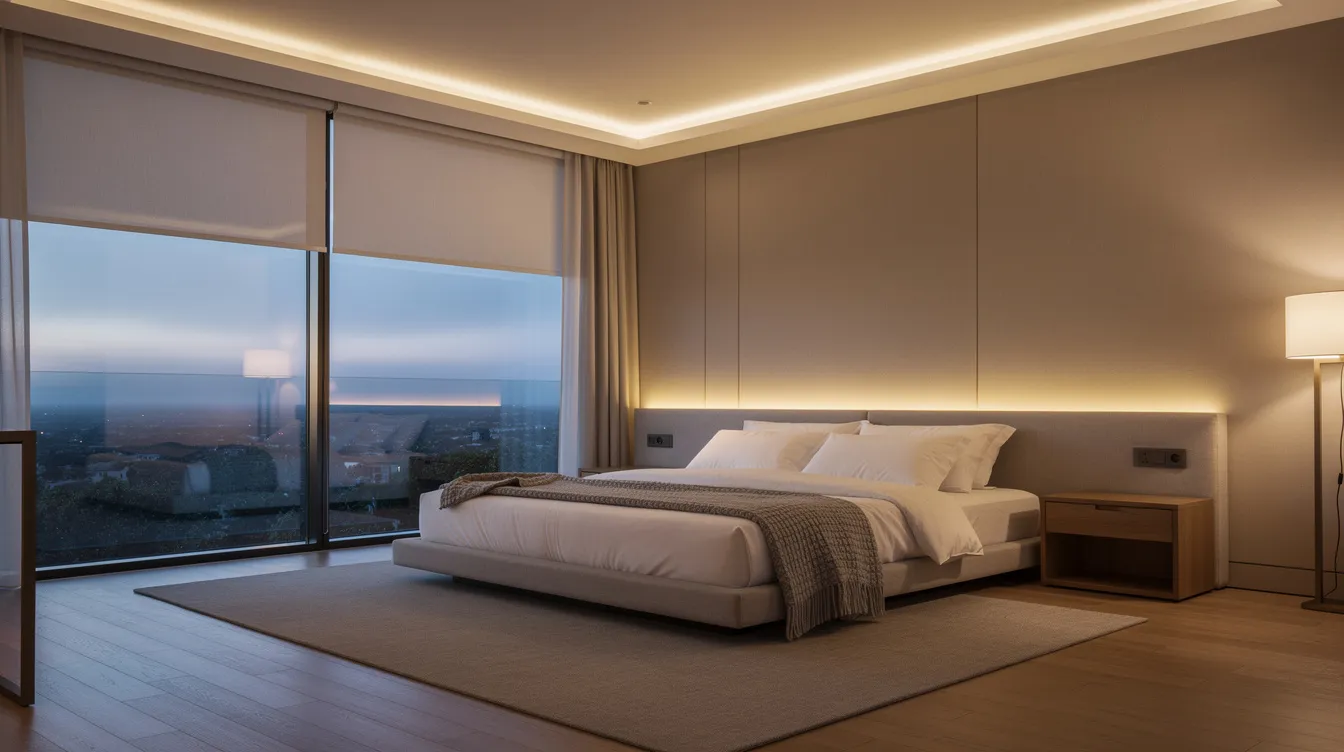
Bedrooms & Home Office Climate and air quality control automation manages temperature, humidity, and air purifiers. Smart shades and calendar-linked lighting support sleep and work routines. Smart lighting can be scheduled or controlled remotely, adapting to whether you're working from home or winding down for the night.
Smart Home Security vs Automated Security
Both smart home and home automation significantly improve home security, but they do it differently.
Smart security gives you app-based cameras, video doorbells, smart locks, and DIY alarm kits. Smart security systems provide remote access to surveillance cameras, and smart home systems can alert homeowners of detected motion. This is especially useful for checking the front door or side yard while you're away. You can make video calls to visitors through a smart doorbell and grant or deny access with smart locks.
Automated security goes deeper. A professionally designed home automation system can arm itself when everyone leaves, simulate occupancy with lighting scenes, coordinate with security cameras, and trigger whole-house responses, including lights on, sirens, and notifications, when an event occurs. Home automation enhances security with remote monitoring capabilities that don't depend on someone remembering to tap an app.
Advanced integrations Brinster Electronics can implement:
- Geo-fencing that disarms security systems as you arrive
- Time-based access codes for housekeepers or contractors
- Security events that pause a movie and display camera feeds on the TV
- Alerts routed to your phone, a control panel, and a monitoring service
The importance of secure networking, strong passwords, and professional configuration can't be overstated. Without these, even the best smart home devices become vulnerabilities. A space heater left plugged into an unsecured smart plug is one thing; an unsecured smart lock on your front door is another entirely.
Comfort, Energy, and Air Quality: Where Automation Really Shines
Climate control and air quality are areas where automation delivers noticeable monthly savings and health benefits without constant user interaction.
Smart thermostats can save up to 10% on energy bills by learning schedules and optimizing energy use. Home automation can also save up to 10% on energy bills through automated lighting, HVAC management, and coordinated shade control. Automated lighting can reduce energy consumption significantly by eliminating lights left on in empty rooms. These energy savings translate directly into lower energy costs and reduced energy bills.
Zoned HVAC systems adjust based on schedules, occupancy sensors, and weather data. Smart thermostats can learn schedules and optimize energy use, managed manually via apps but optimized automatically via the automation system. Energy consumption drops without sacrificing comfort.
Integration with sensors that monitor CO₂, humidity, and particulate levels lets the automation system trigger fresh air systems, fans, or purifiers to improve indoor air quality. In a Tri-State home, Brinster Electronics might tie together smart shades, skylight controls, and thermostats to manage solar gain and cooling load, a setup that's especially valuable during New Jersey's humid summers and cold winters.
With energy prices fluctuating, these automations help homeowners manage utility costs. Saving money on energy bills isn't just about the thermostat; it's about every system working together intelligently.
AV, Home Theater, and Whole‑Home Audio in Smart & Automated Homes
Audio-visual systems are often the most visible "wow" factor of both smart homes and automated homes.
Smart AV means app control and voice control of TVs, streamers, speakers, and receivers, plus integration with platforms like Google Home. You can cast content, switch inputs, and adjust volume from your phone or with a voice command.
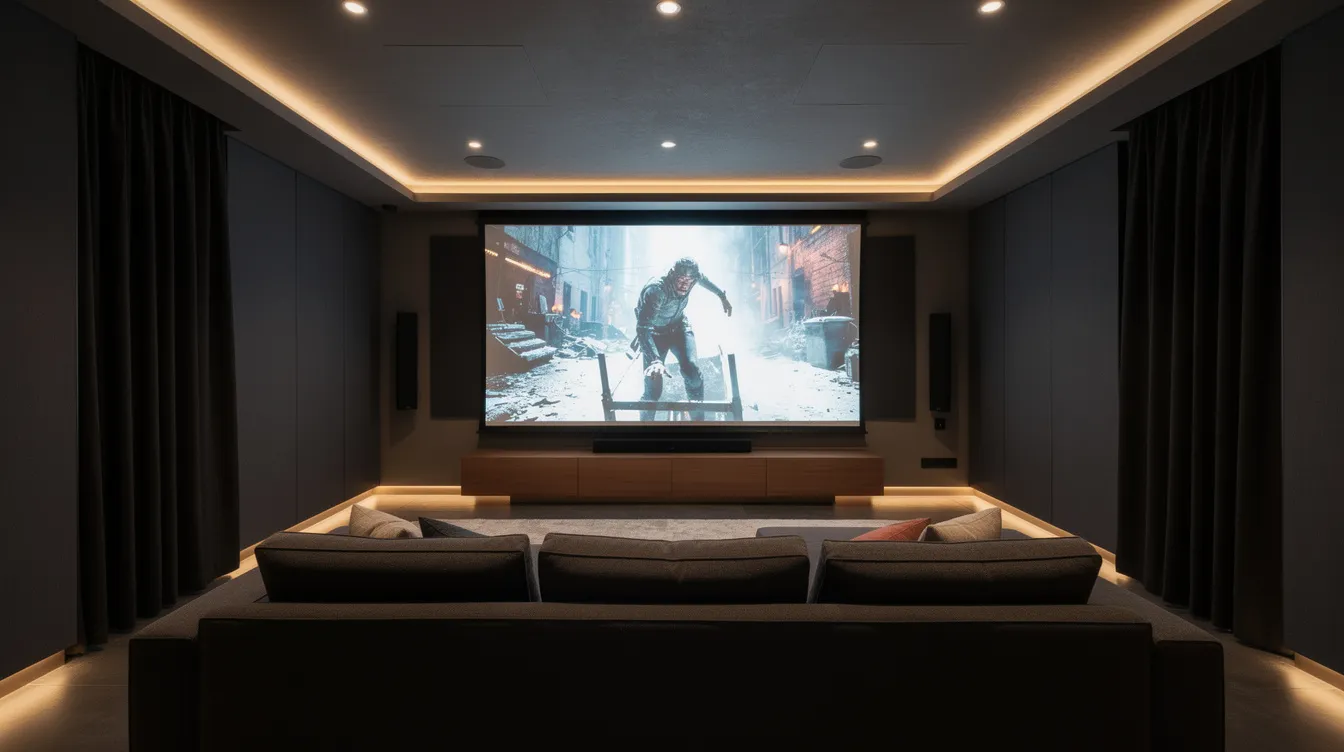
Home automation adds deeper integration. A single command can lower the projector, close shades, dim lights, switch inputs, and set volume, ideal for Brinster Electronics home theater installations. No fumbling with three remotes and two apps.
Whole-home audio systems let music follow you from kitchen to patio, controlled via wall keypads, apps, or voice. Behind the scenes, routing and power management are handled by the automation system so other devices don't interfere and the experience is seamless. Indoor and outdoor audio solutions are among the most requested services we provide in the Tri-State region.
Planning Considerations: New Builds, Major Renovations, and Retrofits
If you're planning a project in 2026–2027, here's how to think about smart technology and automation based on your scenario:
New builds: Plan a wired or hybrid home automation system from the blueprint stage. Pre-wire for security cameras, front yard lighting, Wi-Fi access points, and dedicated AV spaces. This is when a full automation backbone is most cost-effective, and running cable is cheap before drywall goes up.
Major renovation: Use the opportunity to upgrade electrical and low-voltage infrastructure. Even if you're not ready for full automation now, pulling extra cable runs keeps future smart home and automation options open and scalable.
Retrofits and finished homes: Focus on wireless smart home devices plus targeted wired upgrades like better networking or a central AV rack. Brinster Electronics can install these with minimal disruption to your daily life.
Early consultation with Brinster Electronics helps avoid costly change orders and ensures technology supports how you'll actually live in the space.
Costs, Complexity, and Choosing the Right Path
Costs vary widely, but the main choice is between piecemeal smart devices, a fully designed automation system, or a hybrid:
- Entry-level smart home: A few of the best smart home devices, a smart thermostat, smart doorbell, smart speaker, and some smart bulbs. Smart home installation averages about $897, and many smart home products can be purchased individually for under $100.
- Full home automation: Fully automating a four-bedroom home can cost upwards of $15,000. Larger estates with integrated shading, AV, and security run significantly higher. Home automation requires a higher investment and more complex setup than smart technology.
- Hybrid: Start with core infrastructure and key automations, then layer on more rooms or features over time. This is where most Tri-State homeowners land.
While DIY smart devices can be affordable, mixing different brands and apps without a plan can create confusion. Automation systems cost more upfront but streamline daily use. Smart homes allow remote control of devices, but without a coherent plan, you end up juggling apps.
Start with a clear list of goals: security, energy, entertainment, accessibility. Then consult Brinster Electronics for a tailored roadmap. Projects can be phased so you're not committing to everything at once.
How Brinster Electronics Designs and Installs Smart & Automated Homes
Brinster Electronics follows a structured process for every project:
- Consultation: On-site or virtual meeting in the Tri-State area to understand your house, lifestyle, and goals
- Needs analysis: Evaluating what you already have, what you want, and what's realistic for your budget and property
- System design: Selecting the right mix of smart home products, automation platforms, and networking gear
- Proposal and approval: Clear scope, timeline, and cost before any work begins
- Installation: Professional wiring, equipment racks, device mounting, and clean aesthetic finishes
- Programming and training: Custom scenes, schedules, and user training so the system feels intuitive from day one
- Ongoing support: Adjustments to automation routines and recommendations as new devices and standards evolve
We work on both residential and commercial projects, from single-room media upgrades to full-property automation linking indoor and outdoor audio, lighting, and security. We handle secure networking, equipment racks, wiring, and neatly mounted devices, ensuring a clean aesthetic rather than a tangle of visible cables.
Our local focus covers all of New Jersey plus nearby Pennsylvania and New York, with knowledge of regional building practices and service expectations.
Frequently Asked Questions About Smart Home vs Home Automation
Can I mix smart home devices from different brands?
- Mixing brands is possible and common. It works best when you pick a primary ecosystem like Google Home, Alexa, or Apple HomeKit and ensure new devices connect to it.
- Standards like Matter are improving cross-brand compatibility, but not all devices fully support them yet. A Hue Bridge might connect your smart bulbs, while other devices use Z-Wave or Zigbee.
- Brinster Electronics helps clients in PA, NJ & NY evaluate existing gear and design an integration plan so different brands behave as one coherent system, eliminating the app overload problem.
Do I need a major renovation to get home automation?
- Full wired automation is easiest during new builds or major renovations, but many modern systems use a hybrid of existing wiring and wireless components
- Brinster Electronics can often add meaningful automation, including lighting scenes, climate schedules, and smart security, to finished homes without tearing down walls.
- If you're planning work in the next 12–24 months, bring Brinster Electronics into the planning conversations early. It's far cheaper to run cable before walls are closed than after.
Is a smart home or home automation system easy to manage long term?
- A well-designed system should feel simple day to day, even if it's technically complex under the hood. You shouldn't need to open five apps to set schedules or control your lights.
- Brinster Electronics programs intuitive scenes and provides clear documentation and training so homeowners aren't stuck wrestling with confusing interfaces.
- Remote support and occasional tune-ups keep systems responsive as needs change, whether that means adding a room, adjusting battery life expectations on sensors, or updating a washing machines integration.
How secure are smart home and automation systems from hacking?
- Any internet-connected device has some risk, but strong passwords, separate guest networks, and regular firmware updates drastically lower the odds of compromise.
- Professionally configured systems from Brinster Electronics use secure networking gear and best practices to protect cameras, locks, and automation controllers. We don't leave default credentials in place.
- Avoid default passwords on every device. For critical systems like home security, work with a trusted local integrator rather than relying on generic cloud-only solutions.
Can Brinster Electronics fix or expand my existing system?
- Yes. Brinster Electronics can often repair, reconfigure, or expand existing smart home and home automation setups installed by others, depending on brand and condition.
- A typical evaluation visit in the Tri-State area involves technicians assessing current wiring, devices, and pain points before recommending upgrades. Often, key components can be reused in a modernized design.
- If your system feels outdated or unreliable, request an assessment before ripping everything out. You might be surprised how much can be salvaged and improved.
Ready to Upgrade Your New Jersey Home? Talk to Brinster Electronics
Whether you want a few of the best smart home devices integrated into a stable network, a full home automation system during a new build, or a custom home theater and outdoor audio setup, Brinster Electronics handles everything from design through installation across the Tri-State area.
Schedule a consultation to walk through your goals, whether that's home security, energy efficiency, air quality, entertainment, or remote access. We'll build a tailored plan around how you actually live, not a one-size-fits-all package.
Early planning, before wiring is finalized or equipment is purchased, leads to cleaner installations, fewer compromises, and better long-term performance. That's true whether you're in a Jersey City condo or a Bucks County estate.
Brinster Electronics is your home technology partner for smart homes and automation across PA, NJ & NY. Contact us today and let's turn your ideas into a reliable, easy-to-use reality.